How Moving Into Assisted Living Affects Dogs
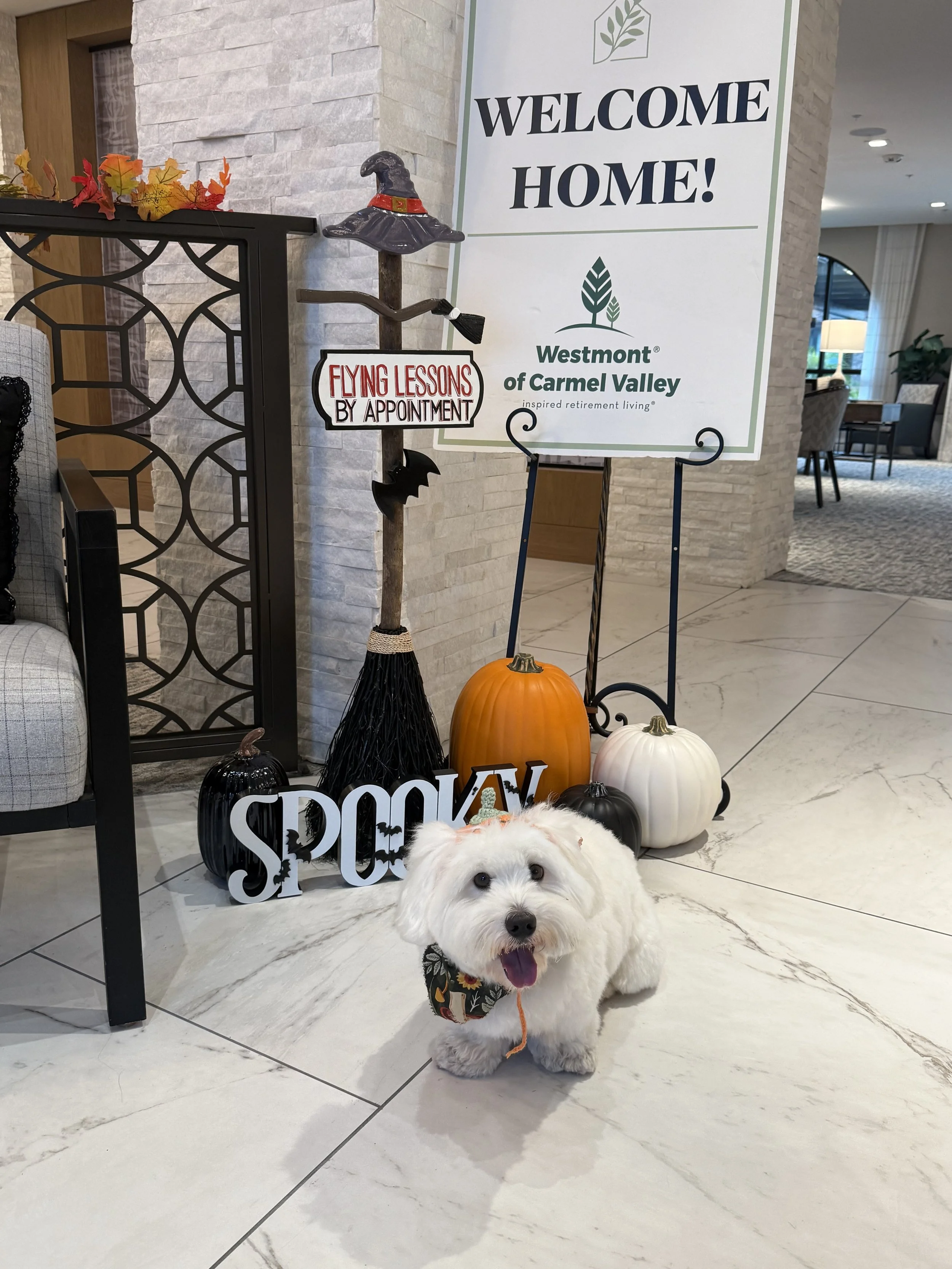
Moving into an assisted living community is one of the biggest transitions a person can experience. It's also one of the biggest transitions a dog can experience.
While families naturally focus on helping their loved one adjust, it's important to remember that dogs are processing an enormous amount of change as well. A dog who has always been confident and easygoing may suddenly seem anxious, fearful, withdrawn, or unusually reactive.
In many cases, this isn't because something is "wrong." It's because their entire world has changed. Understanding what your dog is experiencing can help you support them with patience, compassion, and realistic expectations.
Dogs Experience Major Life Changes Too
Many dogs entering assisted living have lived in the same home for years - sometimes their entire lives. They know every room, every window, every familiar scent, and every daily routine. Then, almost overnight, everything changes.
For many dogs, the transition may include:
The loss of their primary caregiver or another beloved family member.
Leaving the only home they've ever known.
Moving from a house with a backyard to a private apartment.
Losing familiar walking routes and neighborhood smells.
Seeing fewer familiar faces each day.
Adjusting to an entirely new daily rhythm.
Each of these changes is significant on its own. Experiencing them all at once can understandably feel overwhelming.
A Senior Living Community Is a Very Different Environment
Today's assisted living communities are warm, welcoming, and thoughtfully designed - but from a dog's perspective, they're very different from a quiet family home. Instead of one familiar household, there may be:
Staff members coming and going throughout the day.
Medication and wellness visits.
Housekeeping and maintenance staff.
Family members visiting neighboring residents.
Delivery personnel.
Mobility devices such as walkers, wheelchairs, and scooters.
Elevators opening and closing.
Hallway conversations.
Medical equipment with unfamiliar sounds and alarms.
To us, these are simply parts of daily life. To a dog, they represent a constant stream of new sights, sounds, smells, and movement. It's a lot for their nervous system to process.
Behavioral Changes Are Often Normal
Families are sometimes surprised when a dog begins displaying behaviors they've never seen before. For example, a dog may suddenly:
Bark more than usual.
Startle easily.
Follow their owner everywhere.
Become hesitant around strangers.
Guard the apartment door.
Have difficulty relaxing.
Pace or appear restless.
Seem unusually quiet or withdrawn.
Show new sensitivity to hallway noises.
Become anxious when left alone.
These changes don't necessarily mean a dog has developed a permanent behavioral problem. Often, they're understandable responses to an unfamiliar environment.
How Resident Pet Care Services Can Help
At Resident Pet Care Services in San Diego, we understand that moving into assisted living is more than just a change of address - it's a major life transition for both residents and their pets.
As a full-service pet care provider specializing in senior living communities, we do much more than provide walks and feeding visits. We also help dogs successfully adjust to their new environment through individualized behavior support, consistent routines, and confidence-building experiences.
Our goal is to address common transition challenges early - whether that's anxiety, excessive barking, pulling on walks, difficulty settling, or becoming overwhelmed by the constant activity of a senior living community. By helping dogs feel safe and secure, we can often prevent small adjustment issues from becoming larger concerns.
In some communities, ongoing behavioral issues may make it difficult for a resident to continue keeping their dog. By working proactively with both the resident and their pet, we strive to help dogs become happy, well-adjusted members of the community - allowing residents to continue enjoying the companionship, comfort, and sense of purpose that comes from keeping their beloved dog by their side.
After all, our mission isn't just caring for pets - it's helping people and their pets continue thriving together in senior living.
Dogs Need Time to Build a New Map of the World
Dogs learn through repetition. Over time, they build a mental map of what is familiar, safe, and predictable. When they move into assisted living, that map disappears almost overnight.
Suddenly they have to learn:
Which sounds are normal.
Which people belong in the building.
Where they eat and sleep.
Which doors lead outside.
Where they can relax.
What their new daily routine looks like.
This process takes time. Just as people need time to settle into a new home, dogs benefit from patience and consistency while they learn that this new environment is safe.
Routine Becomes Even More Important
During periods of change, predictability is incredibly reassuring. Consistent meal times, regular walks, familiar enrichment, and calm daily routines help dogs understand what to expect. Whenever possible, try to keep the parts of your dog's day that can remain familiar as consistent as possible. Small routines create a sense of stability, even when everything else feels new.
Calm Support Matters More Than Constant Activity
When families notice their dog seems anxious, it's natural to think they simply need more exercise. Physical activity is important - but it isn't always the answer. Many dogs benefit just as much from calm, predictable experiences that help their nervous system settle.
That might include:
Quiet one-on-one walks.
Gentle enrichment activities.
Time to rest between stimulating experiences.
Familiar caregivers.
Opportunities to observe their surroundings without feeling pressured.
Helping a dog feel emotionally safe often creates more lasting confidence than simply trying to tire them out.
The Good News: Dogs Are Remarkably Adaptable
Although the transition can be challenging, most dogs are incredibly resilient. With patience, consistency, and thoughtful support, they begin to recognize familiar faces, learn new routines, and settle into their new home.
Over time, many dogs come to enjoy their daily walks, greet community staff with excitement, make new canine friends, and become cherished members of the senior living community.
Moving Together, Thriving Together
Moving into assisted living marks a new chapter for both people and their pets. Behavioral changes during this time are not signs of failure - they're often signs that a dog is navigating an enormous life transition. By understanding what they're experiencing and providing calm, consistent support, families can help their dogs regain a sense of safety, confidence, and belonging.
After all, home isn't just a place. For a dog, home is the people they trust - and with the right support, that feeling can travel with them wherever life leads next.